
Some worries come and go like passing clouds. A meeting tomorrow. A bill due next week. A text message you maybe shouldn’t have sent.
But sometimes worry… just stays.
It sits in the background of everything. Morning coffee. A conversation with friends. Even quiet evenings when nothing is actually wrong.
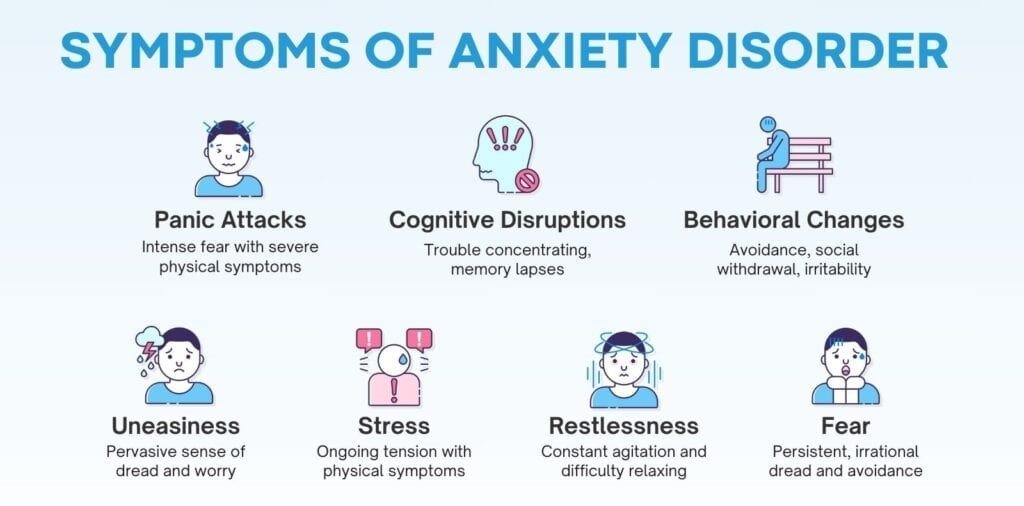
That constant, restless feeling is often connected to generalized anxiety disorder symptoms. Unlike everyday stress, generalized anxiety disorder symptoms can appear even when there is no obvious reason.
People who experience it often say the same thing: “My mind never really stops.”
And the strange part? Many times there isn’t even a clear reason.
Just a constant sense that something might go wrong.
Generalized Anxiety Disorder Symptoms:
Generalized anxiety disorder symptoms include excessive worrying, restlessness, fatigue, difficulty concentrating, muscle tension, and sleep disturbances that persist for months.
What Is Generalized Anxiety Disorder?
Generalized Anxiety Disorder (GAD) is a mental health condition where a person experiences persistent and excessive worry about everyday things.
Not one specific fear.
Just… everything.
Work. Health. Family. Money. The future. Random small things that most people might shrug off.
The brain stays in alert mode far longer than it needs to.
Someone with GAD might logically understand that their worries are exaggerated. But logic doesn’t always quiet the nervous system.
It’s like a car engine that keeps running even after you’ve turned the key off.
And slowly, that constant mental tension starts showing up in the body too.
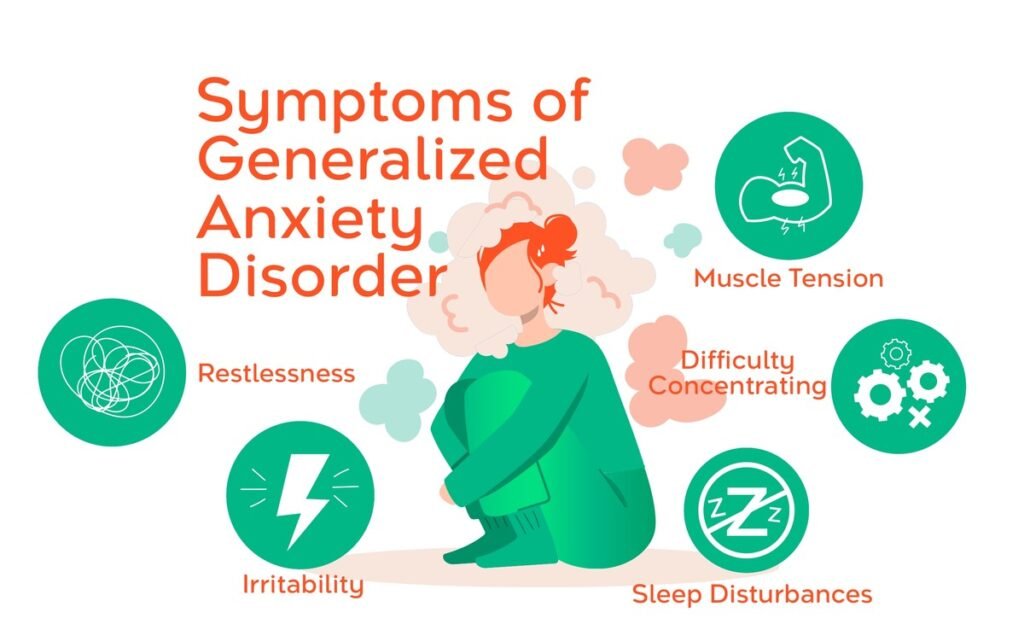
Common generalized anxiety disorder symptoms
The symptoms are rarely loud at first. They creep in quietly.
Many people live with them for years before realizing something deeper is happening.
Some of the most common generalized anxiety disorder symptoms include:
Mental symptoms
Many generalized anxiety disorder symptoms first appear mentally through constant worry and overthinking everyday situations.
- Constant worry about multiple things
- Overthinking everyday decisions
- Difficulty controlling anxious thoughts
- Expecting the worst even when things seem fine
- Feeling mentally exhausted from thinking too much
Sometimes the mind jumps from one concern to another without pause.
Finish worrying about work.
Then relationships.
Then something completely random.
It never fully shuts down.
Physical symptoms
Many generalized anxiety disorder symptoms also appear physically in the body.
Anxiety doesn’t stay only in the mind. It leaks into the body.
People with GAD often experience:
- Muscle tension
- Frequent headaches
- Fatigue
- Difficulty sleeping
- Restlessness
- Rapid heartbeat
- Digestive issues
- Sweating or trembling
It can feel confusing.
Someone might go to doctors for stomach pain or headaches… only to discover stress and anxiety are quietly behind it.
The body keeps score of the mind’s worries.
Emotional symptoms
Emotional generalized anxiety disorder symptoms often create a constant feeling of tension or unease.
These can be harder to describe.
More like a constant emotional atmosphere.
People often report:
- Feeling on edge most of the time
- Irritability
- Difficulty relaxing
- A persistent sense of dread
- Trouble concentrating
Even when nothing bad is happening, the nervous system stays prepared for something that might.
Why Does Generalized Anxiety Disorder Happen?
There isn’t one simple cause.
Mental health rarely works that way.
Usually it’s a mix of several things layered together over time.

1. Brain chemistry
Certain neurotransmitters — the brain’s chemical messengers — play a role in regulating mood and anxiety.
If these systems become unbalanced, the brain may respond more strongly to stress.
It’s not about weakness.
It’s biology.
2. Genetics
Anxiety disorders often run in families.
Not always. But often.
If parents or close relatives struggle with anxiety, the chances of experiencing generalized anxiety disorder symptoms may increase.
Partly genetics.
Partly environment.
Children often learn emotional responses simply by observing how adults around them handle stress.
3. Life experiences
Sometimes anxiety grows quietly after difficult life experiences.
Examples include:
- Childhood trauma
- Major life changes
- Financial stress
- Health issues
- Loss of loved ones
- Long periods of uncertainty
The brain adapts by becoming more vigilant.
More protective.
But that protection can sometimes become overactive.
4. Personality traits
Certain personality patterns may increase vulnerability to anxiety:
- Perfectionism
- High sensitivity
- Over-responsibility
- Difficulty tolerating uncertainty
People who feel deeply… think deeply.
And sometimes that depth becomes overwhelming.
How Generalized Anxiety Disorder Affects Daily Life
Living with GAD can be exhausting in subtle ways.
Not dramatic. Just constant.
Someone might still go to work, attend classes, meet friends.
From the outside everything looks normal.
Inside though, the mind is always calculating risks.
Questions appear constantly:
What if I make a mistake?
What if something bad happens?
What if I forgot something important?
Even small decisions become heavy.
Replying to an email.
Making a phone call.
Choosing what to say in a conversation.
The brain replays scenarios again and again.
Sleep becomes harder. Rest becomes rare.
And over time, the emotional energy it takes just to get through ordinary days starts to wear a person down.
Effective Treatment Options
The good news is that generalized anxiety disorder is treatable.
Many people learn ways to calm their nervous system and regain control over their thoughts.
Treatment doesn’t remove anxiety completely — no one lives without it — but it makes it manageable.

Therapy
One of the most effective treatments is Cognitive Behavioral Therapy (CBT).
CBT helps people:
- Recognize anxious thought patterns
- Challenge unrealistic fears
- Build healthier thinking habits
- Develop coping strategies
It’s less about “positive thinking” and more about understanding how thoughts influence emotions and behavior.
Over time, the brain learns new patterns.
Medication
In some cases doctors may recommend medication to reduce symptoms.
Common options include:
- Antidepressants (SSRIs or SNRIs)
- Anti-anxiety medications
- Beta blockers for physical symptoms
Medication can help stabilize brain chemistry, especially when anxiety becomes overwhelming.
But it’s usually most effective when combined with therapy.
Lifestyle changes
Sometimes the smallest daily habits influence anxiety the most.
Helpful changes include:
- Regular physical activity
- Limiting caffeine
- Consistent sleep schedules
- Mindfulness or meditation
- Deep breathing practices
- Spending time in nature
None of these are instant cures.
But together they slowly calm the nervous system.
Like teaching the body that it’s safe again.
Support systems
Anxiety often grows stronger in isolation.
Talking openly with trusted people can help.
Friends. Family. Support groups.
Just hearing someone say “I understand that feeling” can reduce the weight of worry.
Humans regulate emotions together.
Not alone.
When to Seek Professional Help
Occasional anxiety is normal.
But persistent generalized anxiety disorder symptoms may need professional attention if they:
- Interfere with daily life
- Affect sleep regularly
- Cause constant distress
- Lead to physical health problems
- Make it difficult to concentrate or function
Seeking help isn’t failure.
It’s awareness.
And honestly, most people wait far longer than they need to.

Conclusion
Learning to manage generalized anxiety disorder symptoms takes time, but many people regain emotional balance with the right help.
With therapy and healthy coping strategies, generalized anxiety disorder symptoms become easier to control.
Anxiety is part of being human.
But Generalized Anxiety Disorder is different from normal worry.
It’s heavier. More constant. More draining.
The mind gets stuck in a loop of “what ifs.”
And living inside that loop every day can quietly wear someone down.
But there is hope.
With therapy, support, lifestyle changes, and sometimes medication, many people learn to manage generalized anxiety disorder symptoms and reclaim a sense of calm.
Not perfect calm.
Just enough quiet inside the mind to breathe again.
Sometimes that’s all someone really needs.
FAQs
1. What are the most common generalized anxiety disorder symptoms?
The most common generalized anxiety disorder symptoms include excessive worrying, restlessness, fatigue, difficulty concentrating, muscle tension, and sleep problems.
2. How is generalized anxiety disorder different from normal anxiety?
Normal anxiety appears during stressful situations and eventually fades. Generalized anxiety disorder involves persistent and uncontrollable worry about everyday situations, even when there is no clear reason.
3. Can generalized anxiety disorder be cured?
GAD may not completely disappear, but it can be effectively managed with therapy, medication, and lifestyle changes.
4. What triggers generalized anxiety disorder symptoms?
Triggers vary for each person but may include stress, uncertainty, health concerns, financial issues, relationship problems, or past trauma.
5. When should someone seek help for generalized anxiety disorder?
Professional help is recommended when generalized anxiety disorder symptoms start interfering with work, relationships, sleep, or overall quality of life.

1 Comment
Signs of Depression in Adults When to Seek Professional help
[…] some cases, persistent worry and mental tension may indicate generalized anxiety disorder symptoms, which often overlap with […]